Let’s be honest—water softeners are the kind of appliance most people forget about until something weird starts happening. Maybe the dishes come out filmy. Or your skin feels dry no matter how much lotion you slather on. You lift the lid of that mysterious side tank—the brine tank—and stare at the mix of salt and water like it’s some kind of science experiment gone wrong. How much is too much? Too little? Should it look like that?
Let’s unpack this whole water softener situation in a way that makes sense without drowning in jargon. Whether you’re just curious or troubleshooting, this is your go-to guide to salt, water, and that stubborn tank in the corner of the basement.
So, How Full Should That Brine Tank Be, Anyway?
This is the million-dollar question that’s oddly hard to find a straight answer to. But here’s the thing: it’s not supposed to be filled to the brim like a coffee mug on Monday morning.
Most manufacturers and plumbing pros will tell you your brine tank should only be filled halfway to two-thirds with salt. Why? Because a little breathing room at the top helps with air flow, prevents salt bridging (a crusty situation where a hard layer forms), and allows the system to work its magic efficiently. The salt gradually dissolves in water, and if it’s jammed full 24/7, that process doesn’t happen quite right.
So, if you’re looking in and wondering how full should my water softener tank be, the answer is: not more than two-thirds. And definitely don’t panic if you see some water in there—depending on your softener model, that’s totally normal.
Now Let’s Talk Salt — But Not Just Any Salt
You’d think salt is salt. Table, rock, solar, pellet… how different can it be?
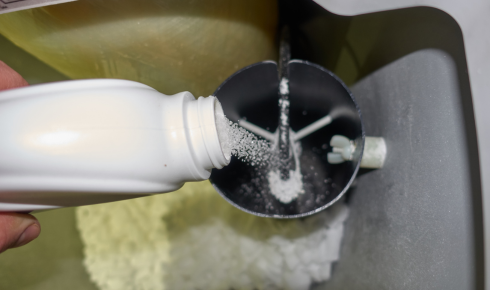
Well, it matters more than you’d expect. Most water softener systems are happiest when fed with clean, high-purity salt pellets. They dissolve slowly, leave behind fewer impurities, and are less likely to gunk up your system.
But the amount of salt? That’s where folks tend to overdo it or not do enough. If you’re asking how much salt for water softener systems, a good rule of thumb is this: 6 to 8 pounds of salt per regeneration cycle for smaller systems, and up to 15 pounds for larger households or older models. You’re not dumping in a 40-pound bag every week unless you’ve got extremely hard water or a massive family running five showers a day.
It also depends on how often your system regenerates—some do it daily, others weekly. If you find yourself running through bags of salt like a winter snowstorm’s coming, it might be time to check your settings or upgrade to a more efficient model.
Ah Yes, The Water in the Brine Tank—Is That Normal?
You peek inside and spot water pooled at the bottom. Cue the internal alarm: “Is this supposed to happen?!”
Short answer: yes. Most brine tanks are designed to hold a certain amount of water at the bottom at all times. That’s the brine—the salty solution that gets drawn into the softener during regeneration to flush out minerals like calcium and magnesium.
But how much water in brine tank is ideal? Generally, for standard residential softeners, you’re looking at about 6 to 10 inches of water sitting below the salt line. If the salt’s above it (and it should be), you may not even notice the water at all. That’s normal.
Where things go sideways is if you notice the entire tank is filled to the top with water. That’s a red flag. It could be a clogged drain line, a float valve that’s stuck, or a failed injector. In that case, yeah—you’ll want to call in backup before it turns into a salty swamp.
Maintenance Isn’t Sexy, But It Works
If you want your water softener to keep doing its job—preventing scale, protecting appliances, and making your skin feel like it belongs in a spa—then some light maintenance is a must.
Every month or so, give the brine tank a peek. Is the salt low? Top it off. But don’t go above that trusty two-thirds mark. Seeing mushy, slushy salt? Time to break it up with a broom handle (gently!) or do a quick clean-out if things look funky. About once a year, it’s worth doing a deep clean to flush out sediment and leftover gunk.
Also, check for “salt bridging,” where a solid crust forms on top but leaves a hidden void underneath. It can trick you into thinking everything’s fine when in reality, the system’s just gasping for brine.
Signs It’s Time for a Reset (or a Professional)
Here’s a not-so-fun truth: water softeners can limp along for months before you realize they’re not working properly.
If your water suddenly tastes off, soap doesn’t lather, your laundry feels scratchy, or scale returns on faucets—something’s up. It could be salt level issues, mechanical failure, or programming gone rogue.
Modern systems often have digital displays or alerts to help you troubleshoot. Older ones? You’re flying blind unless you know what to look for.
If you’re constantly adjusting salt levels or can’t remember the last time you checked water levels, it’s worth calling a pro for a tune-up—or at least watching a few YouTube videos to get your bearings. These systems are workhorses, but they need a little TLC to keep running right.
The Takeaway? It’s All About Balance
You don’t need to be a plumber or chemist to keep your water softener in good shape. It really boils down to three things:
- Don’t overfill the tank with salt. Stick to halfway or two-thirds full.
- Use the right kind of salt, and the right amount, based on your system and water hardness.
- Expect water at the bottom of the brine tank—but not flooding the entire thing.
Understanding how much water in brine tank, how much salt for water softener, and how full should my water softener tank be isn’t just about numbers—it’s about getting comfortable with your system, knowing what “normal” looks like, and catching red flags before they become costly problems.